Muntingia is a genus of plants in the family Muntingiaceae, comprising only one species, Muntingia calabura, and was named in honor of Abraham Munting. It is native to the Neotropics, from Mexico south to Bolivia and Argentina, with edible fruit, and has been widely introduced in other tropical areas.
Description
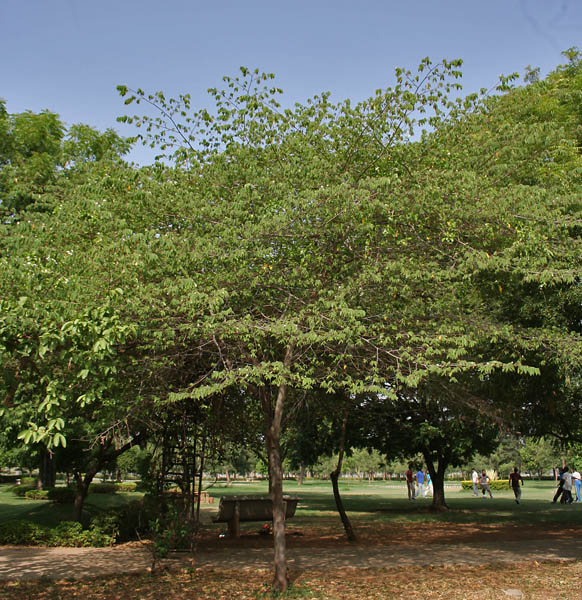
Muntingia calabura is a shrub or tree that grows fast up between 7.5 to 12 m tall with spreading branches. The leaves are alternate, distichous, oblong or lanceolate, 4–15 cm long and 1–6 cm wide, with toothed margin and covered in short hairs.
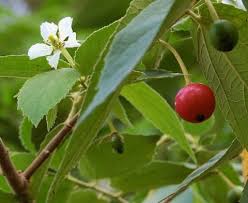
The flowers are small (up to 3 cm wide), solitary or in inflorescences of two or three flowers, with five lanceolate sepals, hairy, five obovate white petals, many stamens with yellow anthers, and a smooth ovoid ovary. The flowers last only one day, their petals drop in the afternoon.
Its fruit is an edible berry with about 1.5 cm wide in diameter and smooth, thin skin; they are green when unripe turning into red when they are mature. Its pulp is light-brown and juicy, with very fine seeds; the pulp tastes like fig.